

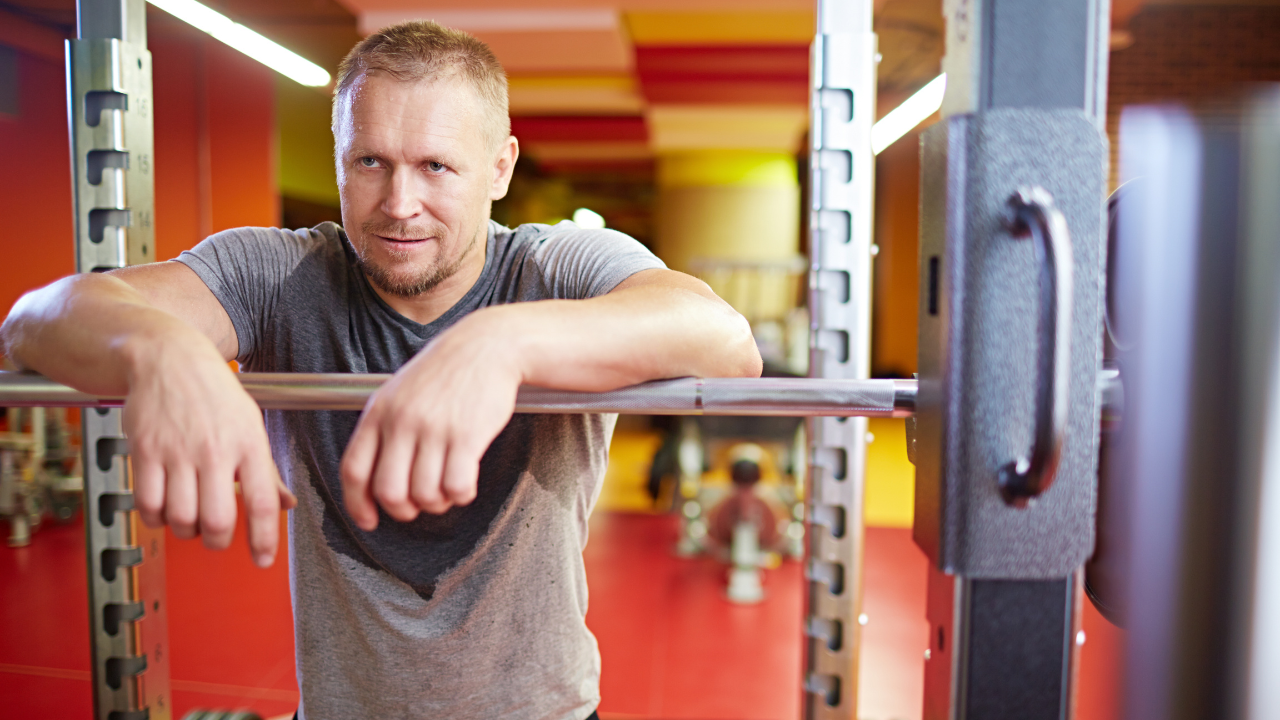



You lost weight, got stronger, and changed your body with real discipline, and your wife still isn’t interested. If you’re wondering what that says about you, this episode is for you.
For a lot of married men, the gym feels like the obvious answer when intimacy fades. It’s measurable, it’s private, and it doesn’t require a difficult conversation. But when a wife pulls away physically in a long-term marriage, it’s rarely about how her husband looks. In this episode of Create More Intimacy: A Podcast for Men, we’ll look at why getting in shape so often misses the target, what she’s actually responding to, and how to point the discipline you already have at what’s really going on between you.
Why isn’t my wife attracted to me after I got in shape?
When a man’s wife stops reaching for him, attraction is usually the first explanation he lands on. If she doesn’t want me, the reasoning goes, the problem must be what she sees. For many women in long marriages, though, desire grows out of emotional closeness. It doesn’t come before it. A stronger body can’t reach a place where she feels emotionally alone. You’ll hear why getting fitter without any change at home isn’t proof that you’re unattractive. It shows that attraction was never the bottleneck.
Why does my wife seem annoyed about my workouts?
Getting in shape takes time: early alarms, evening classes, long weekend rides, race training. From his side, it’s healthy and responsible. From hers, it can look like her husband found hours for himself in a week when she couldn’t find any, while she handled the kids, the house, and the mental load. We’ll cover why her coldness after a workout is usually about his absence and not a rejection of the new version of him.
Can trying to earn her desire push her further away?
When effort comes with an expectation, it starts to feel like a bill instead of a gift. If she senses that her attention is now owed because you did the work, that pressure can push her further away. You’ll hear why being pursued by someone she isn’t feeling drawn to doesn’t feel flattering to her, and why assuming your body works on her the way hers works on you keeps missing.
What is the gym protecting me from?
The gym is a place where effort reliably pays off. Home often isn’t. We’ll talk about how a respectable habit can also become a way out of the room when feeling unwanted in your own house gets too painful. We’ll also cover why outside attention can feel so good when you’ve been lonely in your marriage, and why it’s worth being honest with yourself about that.
In this episode, you’ll learn:
- Why getting in shape feels like the logical fix when your wife loses interest
- What women in long-term marriages are often responding to instead of physical appearance
- How your fitness goals can turn into pressure she feels but can’t easily name
- Why time spent training can leave her feeling more alone, even when you frame it as being for the family
- How to keep the mental health benefits of exercise without asking your body to earn her desire
- How to take the discipline you’ve built at the gym and apply it to emotional presence at home
If this episode sounds like your marriage, you don’t have to keep guessing. Book a free 30-minute Relationship Clarity Call at https://alisastoddard.com. We’ll look at your situation honestly: what’s happening, what’s possible, and whether working together makes sense. You’ll leave with real clarity either way.
Mentioned on the Show
-
Got something you want me to talk about on the podcast? Send me a message here.
- Ready to stop chasing and start connecting? Watch the free intimacy training.
-
Follow me on Instagram, Facebook or YouTube for quick insights and tools to shift the dynamic at home.
-
Not sure where to start? Book a free Relationship Clarity call and bring the one thing that’s not working – we’ll tackle it together.
-
Want to listen to another episode? Browse all podcast episodes here.
Full Transcript
Episode 74: Why Getting in Shape Won’t Fix Your Wife’s Lack of Desire
You’ve been getting up at 5:15. You finally lost the weight you’d been meaning to lose for years. You cut back on drinking. You know your protein numbers now, and you didn’t a year ago. Your shirts fit differently. A guy at work asked what you’ve been doing. Your doctor was pleased with your bloodwork.
And at home, almost nothing has changed.
Maybe she said “you look good” once, in the same voice she uses to tell you the dishwasher is done. Maybe she said nothing. Maybe you caught yourself standing in the bedroom a little longer than you needed to, half hoping she’d look up. She didn’t. Or she did, and then went back to her phone.
There’s a specific kind of hurt in that moment. You did the thing. You did it consistently, which is harder than most people realize. You were fairly sure, even if you never said it out loud, that this would be what shifted things between you. And now you’re left with a question that feels worse than the one you started with. If it wasn’t my body, then what is it about me?
That question is what this episode is about. We’ll look at the reasoning that sent you to the gym, what she’s actually responding to, and why the effort you’ve put in is real but pointed at the wrong target.
Section 1: Why the Body Made So Much Sense
Let’s start with how you got here, because the reasoning wasn’t foolish. Given what you were working with, it was pretty sensible.
You noticed she’d stopped reaching for you. Maybe sex had become rare, or it had stopped altogether. Maybe she stiffens a little when you touch her in the kitchen, or she’s already turned over by the time you get to bed. One man described it to me as, “She avoids physical contact at all costs.” When you’re on the receiving end of that, your mind goes looking for an explanation, and for a lot of men the first one that shows up is attraction. She doesn’t want me, so she must not be attracted to me anymore. And if that’s the problem, the most obvious thing to change is what she sees.
That conclusion has a lot going for it from where you’re standing.
It’s measurable. You can step on a scale, track your lifts, and watch your waist come in. After months of feeling like nothing you do at home registers, the gym gives you numbers that move when you move them.
It’s private. You don’t need her agreement to start. You don’t need to have a difficult conversation about why things feel off, or risk hearing something you don’t want to hear. You can work on it at 5:15 in the morning while she’s asleep.
It matches how you’ve solved everything else. You’ve built a career on identifying a problem, applying effort, and staying consistent until it gives. And the culture around you backs it up. There’s no shortage of content telling men that attraction is earned through physique, and that if your wife isn’t interested, you’ve let yourself go. The promise is always the same: fix what she sees, and the rest will follow.
And notice who’s been noticing. Most of the admiration you’ve gotten has probably come from other men: the guy at work, your buddy who asks what you’re benching, the regulars at the gym. Men tend to size each other up by build and discipline, so it’s easy to assume your wife is measuring you the same way. In a long marriage, she usually isn’t.
There’s one more reason the body made sense, and it’s the least comfortable one. Working on your body keeps the problem outside of you. It’s something you have, rather than something you do. Ten extra pounds is fixable, and it’s not personal. It doesn’t require you to look at how you respond when she’s upset, or what it’s like to be married to you on an ordinary Tuesday. The body is a problem you can respect yourself for solving.
None of this means getting healthier was a mistake. The discipline it took is real. What I want to look at is the job you gave it. You asked your body to fix something that was never about your body.
I also want to be fair here. Your body isn’t irrelevant. If you’ve lost weight, you may have more energy, sleep better, and feel more like yourself, and some men find sex works better physically too. If she ever told you she was worried about your health, the change may mean something to her. But mattering isn’t the same as being the reason she pulled away. When you treat it as the reason, you end up waiting for a response that was never going to come from your body alone.
Section 2: What She’s Actually Responding To
Here’s what I’ve seen, over and over, in marriages where desire has faded.
When a woman has pulled away physically in a long-term relationship, it’s rarely about how her husband looks. It’s much more often about how it feels to be around him. Whether she feels met or managed. Whether she can bring up something that’s bothering her without it turning into a defense, a lecture, or silence. Whether she’s carrying most of the invisible weight of running the household while he handles his part and considers the account settled. Whether, when she’s with him, she can relax.
For many women, desire in a long marriage doesn’t show up first and then lead to closeness. It grows out of closeness that’s already there. If she feels emotionally alone with you, a flatter stomach doesn’t reach that place. It’s answering a question she never asked.
So when you got in shape and nothing changed, it wasn’t evidence that you’re unattractive in some deeper, unfixable way. It was evidence that attraction was never the bottleneck. That’s better news than it feels like right now.
There’s another piece I want to be honest about, because I think it’s happening more than men realize. Your fitness may have become one more thing she’s supposed to respond to.
Think about those months from her side. She could tell your training mattered to you, and at some point she probably sensed an expectation attached to it. Maybe you mentioned your progress a little more often than necessary. Maybe you lingered in the bedroom. Maybe you said something like, “I’ve been working really hard at this,” and there was a question inside that sentence she heard clearly. Well?
When effort comes with an expectation, it stops feeling like a gift and starts feeling like a bill. You did the work, so now her attention is owed. Her desire is expected. And being pursued by someone you’re not feeling drawn to isn’t flattering. It’s uncomfortable. Most women know that feeling from long before marriage: someone decides they’ve earned your interest, and now you’re the one managing their disappointment when it doesn’t show up.
In a marriage, it goes a layer deeper. What you’ve been missing is her body. That’s what you’ve been wanting and reaching for. So it made sense to assume your body would work on her the same way hers works on you. Get it in shape, and she’ll want it the way you want her. But what she’s missing isn’t something she can see. When the reaching comes with a new physique attached, it doesn’t read as desire to her. It reads as the same pursuit, now with more pressure behind it.
A man said to me once, “I feel like I have to prove and earn it, but I keep failing.” That sentence captures the whole trap. The gym became another way to earn her. What she wants from you is rarely more of something. It’s almost always something different. And whatever else the gym gave you, it gave her more of the same: more effort aimed at an outcome, more of you working on something by yourself, and more waiting for her to notice.
Section 3: The Hours It Takes, and What They’re Protecting
There’s a second layer to this, and men tend to miss it completely because from the inside it looks like responsibility.
Getting in shape takes time. The 5:15 alarm. The evening class on Tuesdays and Thursdays. The long ride on Saturday morning that turns into three and a half hours once you add the coffee afterward. Meal prep on Sunday. The podcasts and YouTube videos about training that she hears playing in the car and the kitchen, and that you bring up at dinner.
Not every man who’s lost weight did it at the gym. Some did it in the kitchen, and some with medication. If that’s you, this part may not describe your week, but the rest of this episode still does.
From your side, this is disciplined and healthy. You might even frame it as something you’re doing for the family. You want to be around for the kids. You want to be the kind of man who has his act together.
Now picture the same week from her side.
Saturday morning, you’re out on the bike, and she’s getting two kids fed, dressed, and out the door to a game. Tuesday evening, you’re at your class, and she’s handling homework, dinner, and bedtime on her own. Sunday, you’re portioning chicken into containers, and she’s thinking about the permission slip, the dentist appointment, the dog’s vet visit, and your mother’s birthday. She’ll handle all of it, including the gift for your mother, because she always does.
She’s not angry that you exercise. What stings is that you found hours for yourself in a week where she couldn’t find any, and then you called it something you were doing for the family. And what confuses her most is that you seem to expect her to be more drawn to you because of it. From where she sits, the gym made her more alone. She’s watching the man she wants to feel close to spend his best energy somewhere else, then come home expecting to be wanted.
If she’s been short with you lately, or cold when you get back from a workout, or sharp when you mention the race you signed up for, you’ve probably read that as a rejection of the new version of you. It’s much more likely she’s reacting to your absence. She knows how many Saturdays that race is going to take from the family, and she knows the entry fee came with a very expensive t-shirt. You can’t be admired for something that keeps taking you away from her.
Here’s where I’d ask you to be really honest with yourself, because there’s usually one more thing going on.
The gym is a place where your effort works. You put in the reps and something happens. There’s a clear standard, and you’re meeting it. At home, nothing is that clear. You try, and you don’t know if it landed. You reach, and sometimes she pulls back. You say something you meant well, and it turns into an argument you didn’t see coming.
When home feels like that, a place where effort reliably pays off becomes very appealing. Without deciding to, a lot of men start spending more time where they feel competent and less time where they feel lost. It happens with work, and it happens with hobbies. It happens very often with the gym, because the gym looks unquestionably good. Nobody gives a man a hard time for getting healthier.
So ask yourself what that hour is protecting you from. For many men, it’s the feeling of being unwanted in their own house. That’s a genuinely painful feeling, and it’s much easier to push through a heavy set than to stay in a room with it. The discipline is real. Some of it is also a way out of the room.
I’m not saying this to shame you. You can’t change a pattern you can’t see, and this one is very hard to see when it’s wrapped in something as respectable as taking care of yourself.
Section 4: Keeping the Discipline, Changing the Target
So what do you do with all of this? I’m not going to tell you to stop training. What needs to change is what the training is carrying.
The first shift is letting your body just be your body again. Exercise is one of the most reliable things you can do for your mental health. It helps with stress, sleep, and mood, and it can make you steadier when things get tense at home. That’s a very good reason to keep going, and it doesn’t require anything from her. Train because it clears your head and because you want to be well for the long haul. When you stop asking your body to produce a response from her, the pressure she’s been feeling comes off too. A man who takes care of himself without needing to be rewarded for it is a lot easier to be around than one who’s waiting to be noticed.
While we’re here, I want to be honest about something else. When you’ve felt unwanted at home for a long time and people suddenly start noticing you, it feels good. The guy at work, the regulars at the gym, and sometimes women. That attention can feel like the thing you’ve been missing, and there’s nothing wrong with enjoying it. But pay attention to how much you’re starting to need it. When you’re lonely in your marriage, the distance between enjoying someone else’s attention and making a choice you’ll regret is shorter than it looks. Knowing that ahead of time is a way of protecting yourself and your marriage.
The second shift is about time, and it requires a conversation you’ve probably been avoiding. This isn’t a negotiation where you defend your schedule and she argues for less of it. It’s a real conversation, where you ask what these months have been like for her while you’ve been training, and then you listen without explaining yourself. You may hear that she’s felt alone. You may hear that she’s resented it and felt like she wasn’t allowed to say so, because how do you complain about your husband getting healthy? If you can hear that without getting defensive, it’ll mean more to her than any change to your body. Then the two of you can decide together how your training fits into the life you share, instead of it being something you decided and she absorbed.
The third shift matters most. Take the discipline you’ve shown at the gym and apply it somewhere new.
You already know how to do hard things consistently when you don’t feel like it. You know how to show up at 5:15 when your body is telling you to stay in bed. You know how to keep going past the point where it’s uncomfortable. That’s a real capacity, and most people don’t have it.
Now use it at home. Stay in a difficult conversation for five more minutes after the point where you’d normally shut down or leave the room. Notice what she’s carrying this week, and take something off her plate without being asked and without mentioning it later. Put your phone down when she’s talking and actually listen, day after day, even when it doesn’t seem to be changing anything yet. Let her be irritated without taking it as a verdict on you.
None of that comes with numbers. There’s no scale for it, and nobody at the gym to nod at you. The results come slower and less predictably, and some days it’ll feel like nothing is happening. That’s why it’s harder than the gym. It’s also why it works. She isn’t responding to what you look like. She’s responding to what it’s like to be with you, and that’s something you can change.
When men make this shift, the first thing they usually notice is that the house feels different. There’s less tension when they walk in, and fewer moments where they feel braced for something. She starts talking a little more, sometimes about small things, and they realize how long it’s been since she did. The physical closeness they hoped the gym would bring tends to return later, and on its own terms, once she feels like she has a partner again instead of someone she’s waiting on.
There’s something in this for you, too. When your body no longer carries the job of making you wanted, you get to enjoy it again.
Closing
Before you go, think about this for a minute.
When you started losing the weight or training, what were you hoping would happen at home? Be specific with yourself. Picture the moment you imagined. Was she looking at you differently? Reaching for you? Then ask what it would take for her to feel that way about you on an ordinary Tuesday night, when you’re both tired and the kitchen is a mess. That second picture is where the real work is.
If you’ve been doing everything you know how to do and it still isn’t moving anything at home, I’d like to help you figure out why. Book a 30-minute Relationship Clarity Call [HERE] at alisastoddard.com. We’ll look at your specific situation honestly: what’s happening, what’s possible, and whether working together makes sense. Yes, I’ll tell you about how I work, because that’s part of the call. I’ll also make sure you leave with more clarity than you came in with, whether or not we work together.
You already know how to be disciplined. You’ve proven it. The question is whether you’re willing to point that discipline at what’s actually going on between the two of you.
Book the call. I’ll see you there.
Enjoying the podcast?
Don’t miss an episode – follow the show on:
If this episode resonated with you, would you take a moment to leave a review on Apple Podcasts?
It really does help more men find the podcast – and get the support they need.
Think someone else would benefit from this episode?
Send it their way. It might be exactly what they need to hear right now.
Or just copy and paste this link to share:
https://alisastoddard.com/podcast/getting-in-shape-wont-fix-wifes-desire/